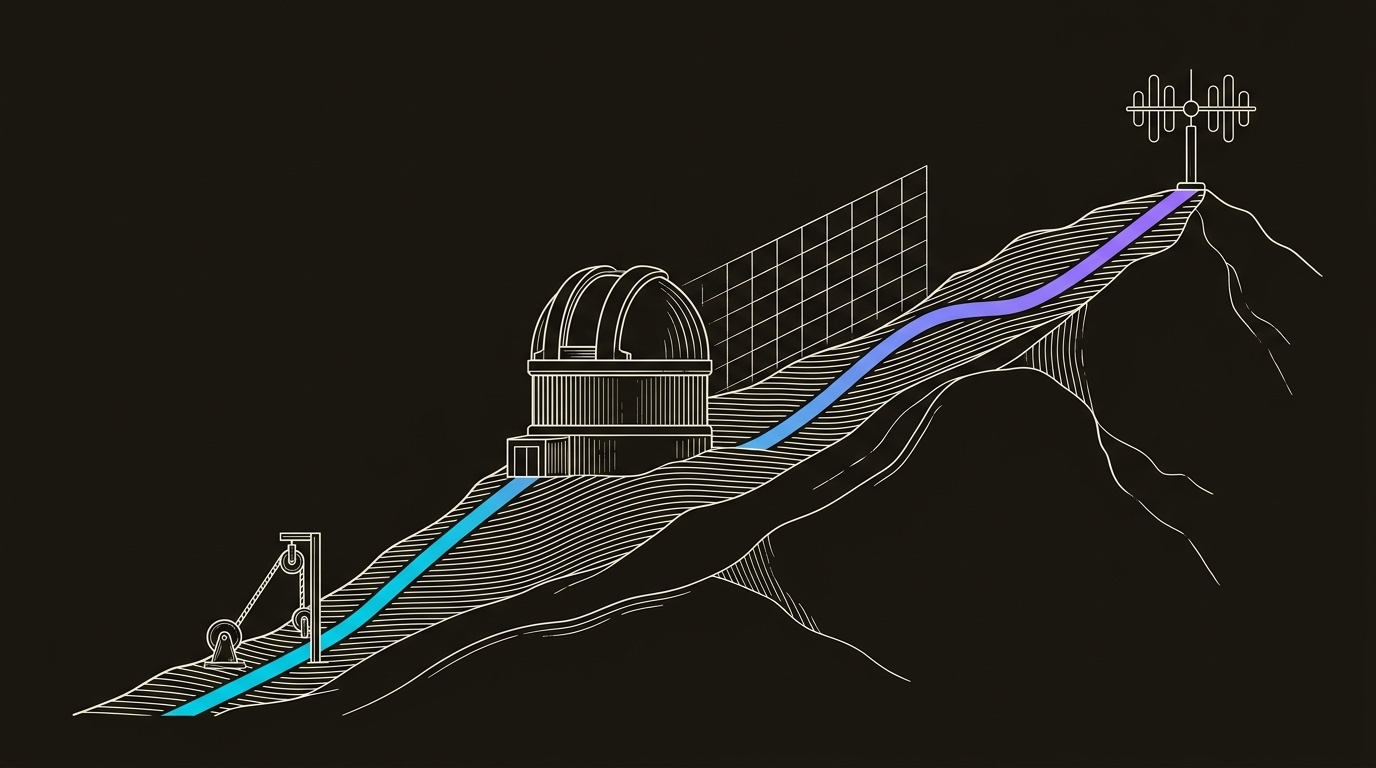
Four consecutive years on the Inc. 5000, 668% revenue growth, and over 500 new clients in a single year across 229 industries: then we rebuilt the entire company from scratch.
Last refreshed March 2026: updated with graph8 transformation narrative and Forward Deployed Engineer model comparison.
By every measure that mattered in 2022, CIENCE was winning.
So why did we rebuild the entire company from the ground up?
From Thomas Cornelius, Founder & CEO, graph8 (formerly Founder, CIENCE): We made the Inc. 5000 four consecutive years by out-executing everyone in outsourced SDR. Then we rebuilt the entire company: not because the model failed, but because we could see where it was heading. GTM as a staffing exercise always hits a ceiling. GTM as an engineering discipline compounds. That shift is what graph8 was built to deliver.
The Award That Marked a Turning Point
In 2022, Inc. magazine placed CIENCE at no. 971 on its annual Inc. 5000 list of America's fastest-growing private companies. It was our fourth consecutive year on the list: a rare streak that put us alongside companies like Under Armour, Patagonia, and Microsoft, who all got their first national exposure through the same ranking.
The growth was real. The model was simple: companies needed B2B lead generation, and we provided the people to get them. Hundreds of SDRs, trained and deployed on behalf of clients who didn't want to build outbound sales teams themselves. At our peak, we were one of the largest outsourced SDR operations in B2B: ranked #1 on Clutch's lead generation list and rated 4.6/5 on Capterra with 200+ verified client reviews.
That year, our CMO Eric Quanstrom said something that, in hindsight, was more prophetic than anyone realized:
"Four years of Inc. recognition is great, but going forward, we're more excited about the next: largely software-led: chapter of our company."
He wasn't being modest. He was watching the ground shift.
What 668% Growth Taught Us
Scaling a people-powered sales development business to Inc. 5000 levels teaches you two things. First, that human effort can produce extraordinary results when organized well. Second, that human effort alone can't keep up with how fast the market moves.
By 2022, our clients were already asking different questions. Not "can you hire more SDRs?" but "can you make the ones we have smarter?" Not "send more emails" but "help us figure out who to talk to and when."
The signals were everywhere:
- Buyer behavior changed. Cold outreach that worked in 2019 was getting ignored by 2022. Decision-makers were doing their own research, and the traditional SDR playbook: spray, pray, follow up: was hitting diminishing returns.
- AI changed the math. Tasks that required a team of five could suddenly be done by one person with the right tools. The value wasn't in the labor anymore. It was in the intelligence behind the labor.
- GTM complexity exploded. Channels multiplied. Data sources fragmented. The companies that won weren't the ones with the biggest teams: they were the ones with the smartest systems.
We had built a machine for a world that was disappearing.
Does This Sound Familiar?
If you're running a B2B sales team right now, you probably already feel it. Your SDRs are sending more emails and booking fewer meetings. Your cost per qualified meeting keeps climbing. You've stacked tools on top of tools: intent data, sequencing platforms, enrichment providers: and somehow the output is getting worse, not better.
You're not bad at sales. The playbook is broken.
From Daniel Conn, Founder, Tenbound (a graph8 company): The SDR model that drove Inc. 5000-level growth was never designed to compound. You'd hire, ramp, and reset every quarter. AI and system-driven GTM changes that equation permanently: your pipeline operation gets smarter each month instead of starting from zero.
That's exactly where we were. And instead of optimizing around the edges, we rebuilt.
If your outbound is producing diminishing returns, you don't need more SDRs: you need a different system.
"CIENCE helped us generate a steady inflow of qualified leads and book meetings for our sales team. Throughout our time with them, they've tripled our weekly meetings booked through outbound prospecting.": Jordan Ehrlich, B2B Marketing Manager, Mandolin
From People to Platform: What CIENCE and graph8 Built
CIENCE is now part of graph8: a company built around a single thesis: go-to-market should be an engineering discipline, not a staffing exercise. The transformation wasn't a rebrand or a pivot deck. It was a complete restructuring of how we deliver results for B2B companies.
Old Model vs. graph8 Model: Side by Side
| CIENCE (2018 to 2023) | CIENCE + graph8 (2024+) | |
|---|---|---|
| Model | Outsourced SDR teams | Forward Deployed Engineers + AI |
| How it works | Hire people to make calls and send emails | Deploy intelligent systems tuned by engineers |
| Targeting | SDRs research accounts manually, update lists quarterly | AI maps ICP across firmographic, technographic, and intent signals: updated continuously |
| Outreach | 1 SDR writes ~50 templated emails/day | Automated multi-channel sequences across email, LinkedIn, and ads: timed to buyer signals |
| Optimization | Team lead reviews calls on Fridays | Engineers monitor conversion data in real time, adjust daily |
| Scaling | Add more people (6-8 week ramp per SDR) | Add more systems (new campaigns deploy in days) |
| Cost | $5K to $15K/mo per SDR team | $5K setup + $2,499/mo for engineered GTM |
| Results over time | Linear: resets each quarter | Compounding: system learns from every interaction |
Here's what each part looks like in practice:
Targeting
Instead of an SDR researching accounts manually, our data platform analyzes your closed-won deals, maps your ICP across firmographic, technographic, and intent signals, and surfaces the accounts most likely to buy: updated continuously, not quarterly.
Outreach
Instead of one SDR writing 50 templated emails a day, automated sequences run personalized multi-channel campaigns across email, LinkedIn, and programmatic ads: coordinated and timed based on buyer behavior signals.
Optimization
Instead of a team lead reviewing call recordings on Fridays, our Forward Deployed Engineers monitor conversion data in real time, adjust messaging, swap channels, and retarget based on what's working this week: not last quarter.
Why Forward Deployed Engineers?
We modeled this on how Palantir operates in defense and intelligence. Palantir doesn't ship software and walk away. They embed Forward Deployed Engineers: technical operators who understand both the platform and the mission. These engineers sit with clients and make the system produce results in the real world, not just in a demo.
CIENCE's Forward Deployed Engineers for GTM work the same way. They're not SDRs reading scripts. They're not consultants writing strategy decks. They build, deploy, and tune your revenue system: your targeting, your sequencing, your channel mix, your conversion paths: and they keep tuning it as your market shifts. They own the outcome, not just the output.
The Results Look Different Now
Under the old model, we measured success in meetings booked and pipeline generated. Those metrics still matter. But our clients now see three things they never got from outsourced SDRs:
Compounding returns. An SDR team starts from scratch every quarter. A graph8 GTM system learns from every interaction: which messages convert, which accounts engage, which channels perform: and gets sharper over time. Quarter two outperforms quarter one without adding headcount.
Lower cost per opportunity. Automation handles the volume. Engineers handle the strategy. You're not paying for 10 people to do what a system and 2 Forward Deployed Engineers do better. Clients regularly see cost-per-meeting drop by 40-60% within the first two quarters.
Speed to market. New campaign? New segment? New product launch? Deployments that took 6-8 weeks with a people model now take days. Your GTM engine adapts at the speed of your business, not the speed of your hiring pipeline.
"They definitely supersede our internal capabilities.": Marketing Director, Learning Ally
"If your process is based on relationships and transactions, you'll be extremely successful with CIENCE.": Head of Sales, Idle Smart
Why This Matters for You Right Now
The go-to-market landscape in 2026 looks nothing like it did when we first hit the Inc. 5000. Everything about how companies find, engage, and win customers is being rewritten: aggressively, and all at once.
If you're still trying to solve GTM by adding headcount or stacking more point solutions, you already know the math doesn't work. More people doesn't mean more pipeline. More tools doesn't mean more clarity.
The companies pulling ahead are the ones who've stopped treating GTM as a staffing problem and started treating it as an engineering problem. That's the shift CIENCE made under graph8. And it's the shift we help our clients make every day.
FAQ
How many times did CIENCE make the Inc. 5000? CIENCE made the Inc. 5000 four consecutive years (2019-2022), with a peak three-year revenue growth rate of 668%. The 2022 ranking at #971 placed CIENCE alongside companies like Under Armour, Patagonia, and Microsoft, who all received early national exposure through the same list.
Why did CIENCE transform after four Inc. 5000 appearances? The outsourced SDR model that powered 668% growth had structural limits: linear cost scaling, 6-8 week ramp times per new SDR, quarterly performance resets, and no compounding use. Under graph8, Forward Deployed Engineers and AI systems deliver 40-60% lower cost-per-meeting with compounding returns.
What does a graph8 engagement cost compared to outsourced SDRs? Outsourced SDR teams typically cost $5K-$15K/mo per team. graph8 engagements start at $5K one-time setup + $2,499/mo and deliver compounding results: the system gets sharper every month rather than resetting every quarter.
"Thanks to CIENCE, we've seen a 500% monthly increase in new sales appointments.": Bryce Garoutte, Sr. VP of Business Dev & Marketing, Silicon Valley Insight
Get a Free GTM Diagnostic
Here's what happens when you reach out: our Forward Deployed Engineers run a diagnostic on your current outbound motion: your targeting accuracy, your channel mix, your conversion rates at each stage: and show you exactly where an engineered system would outperform what you're doing today.
Whether or not you work with us, you'll walk away with a clear picture of your pipeline math.
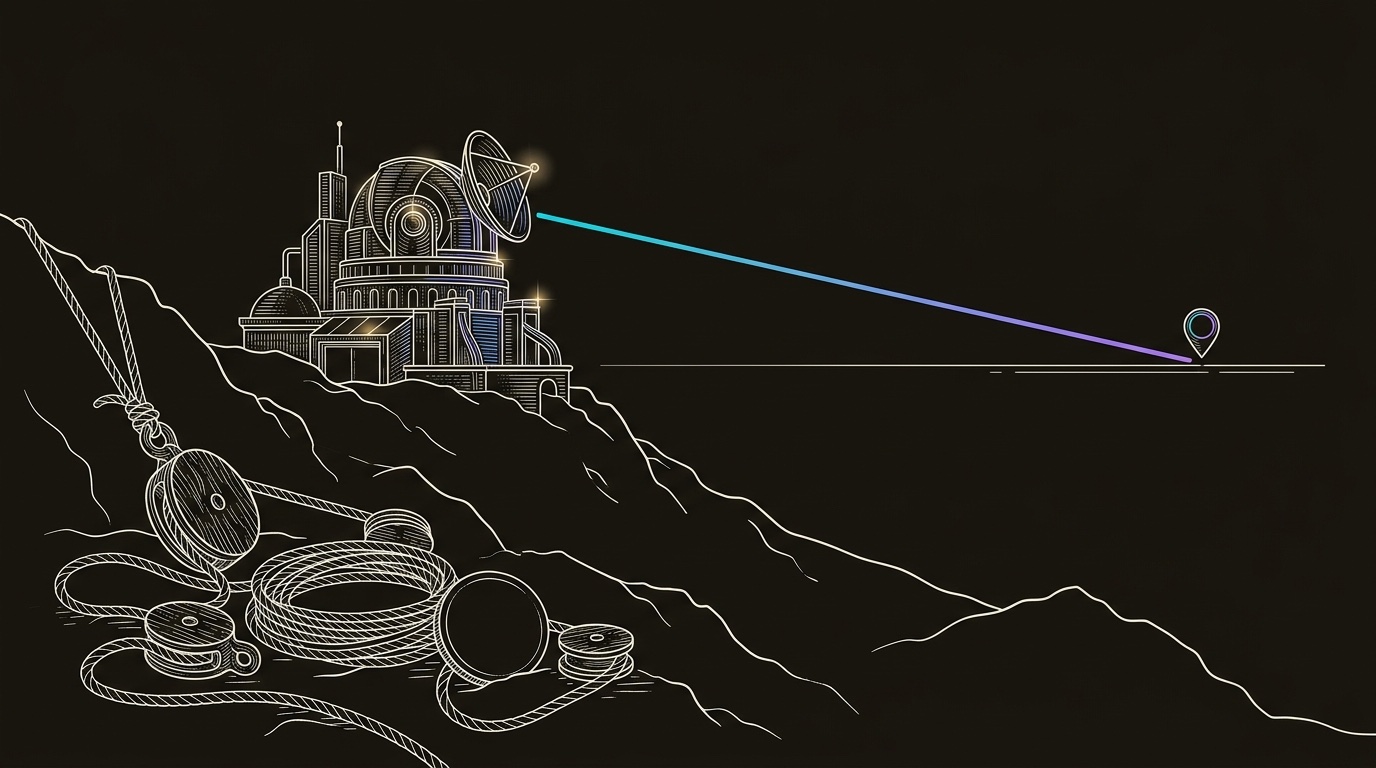
The Inc. 5000 streak remains proof of what CIENCE built with people. The rebuild changes what those people operate: graph8 runs the system, CIENCE delivers the outcome, and the signal keeps improving after the first campaign.