
Last Refreshed: March 2026: updated to reflect graph8 transformation, forward deployed engineer model, and current pricing.
CIENCE made the Financial Times' Americas Fastest-Growing list three times with 668% revenue growth, then rebuilt the company that produced it.
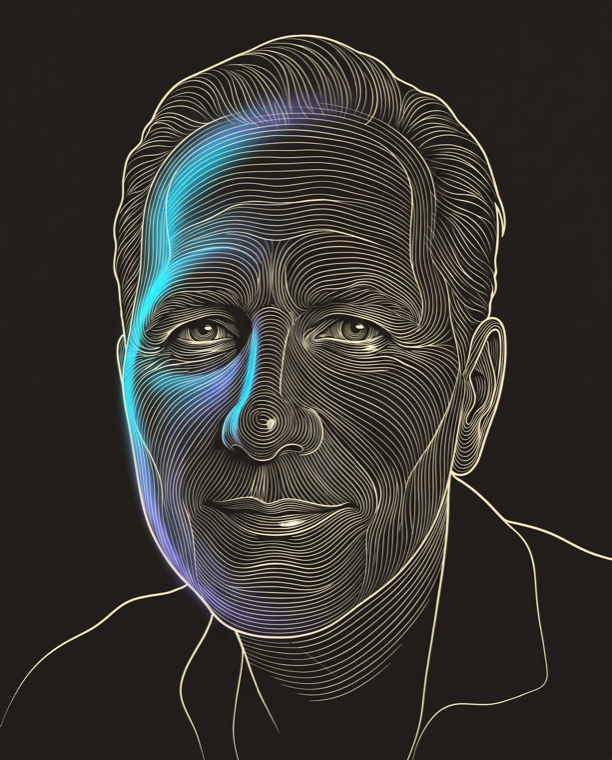
From Thomas Cornelius, Founder of CIENCE and graph8: "We built one of the largest SDR operations in the country. Then we realized the model itself was the constraint. That's why we built graph8: to turn GTM into an engineering discipline, not a staffing exercise."
The Financial Times, in partnership with Statista, ranked CIENCE at #106 on its fourth annual Americas' Fastest-Growing Companies list. The ranking reflected a 97% compound annual growth rate and 668% absolute revenue growth between 2018 and 2021, selected from over 7,000 companies across twenty countries.
It was our third time on the list. The previous appearances: #31 in 2020 and #95 in 2022. Back-to-back-to-back recognition from one of the world's most respected business publications. And then we changed everything.
What 668% Growth Taught Us
Three Financial Times rankings tell you a company knows how to grow. What they don't tell you is whether the growth model is sustainable.
Our 668% revenue growth came from scaling outsourced SDR teams. The formula was simple: companies needed B2B lead generation, and we provided the people to do it. Every new client meant more SDRs, more infrastructure, more overhead. Revenue grew because headcount grew. And headcount grew because demand was enormous.
But revenue growth and margin growth are different animals. By the time we earned the 2023 ranking, the math was getting harder:
- Hiring costs scaled linearly with revenue, with no operating lift
- Ramp times of 6-8 weeks per SDR meant new clients waited months for full production
- Quarterly resets meant every Q1 started from nearly zero momentum
- Client expectations were outpacing what a people-powered model could deliver. They wanted AI-speed results at SDR prices
The Financial Times measured our revenue growth at 668%. What they couldn't measure was the growing gap between how fast we were growing and how fast the market was changing.
"500% monthly increase in new sales appointments." Bryce Garoutte, Silicon Valley Insight
Does This Sound Familiar?
If you're running B2B sales development, you've probably felt this tension yourself. Revenue is growing, or at least holding, but the cost to generate each meeting keeps climbing. You're adding SDRs, adding tools, adding data subscriptions, and the unit economics keep getting worse.
Your go-to-market is growing, but it's not scaling. Those are different things.
Growth means more input produces more output. Scaling means the same input produces more output over time. Every successful B2B company eventually hits the moment where growth stops feeling like momentum and starts feeling like a treadmill.
That's where we were. 668% growth and a model that needed 668% more people to sustain it.
Revenue growth is easy to measure. The harder question: is your GTM model compounding or just repeating?
From People to Platform
CIENCE is now part of graph8, and the reinvention is the direct result of what 668% growth taught us. graph8 was built on the thesis that go-to-market should be an engineering discipline, not a staffing exercise.
The model replaces outsourced SDR teams with Forward Deployed Engineers, technical operators modeled on Palantir's approach to defense and intelligence. Palantir doesn't ship software and walk away. They embed engineers who understand both the platform and the mission. graph8's Forward Deployed Engineers for GTM work the same way.
The difference between the old CIENCE and graph8 shows up in exactly the metrics the Financial Times cares about:
- Growth vs. scale: The old model grew by adding headcount. graph8 scales by adding systems. New campaigns deploy in days, not weeks, without proportional cost increases
- Cost structure: An outsourced SDR team costs $5K-$15K/mo. graph8 engagements start at $5K setup + $2,499/mo managed + $499/mo platform and deliver 40-60% lower cost-per-meeting
- Compounding returns: SDR teams reset every quarter. graph8's system learns from every interaction: which messages convert, which accounts engage, which channels perform. It gets sharper over time
- Speed to market: New targeting segments, new campaigns, new product launches deploy in days, not the 6-8 weeks the old model required
The Forward Deployed Engineers aren't SDRs reading scripts. They're not consultants writing strategy decks. They build, deploy, and tune your revenue system and keep tuning it as your market shifts.
"They definitely supersede our internal capabilities." Candice Long, Learning Ally
Why This Matters Now
The Financial Times tracks growth. In 2026, the more important question is: growth from what?
Companies still trying to grow by adding SDRs and stacking point solutions are hitting the same ceiling we hit, just with less time to course-correct. The market has moved. AI has changed the math. The companies pulling ahead are the ones who've stopped treating GTM as a staffing problem and started treating it as an engineering problem.
CIENCE went from #31 to #95 to #106 on the Financial Times list. Each ranking represented genuine, earned revenue growth. But the model that produced that growth had a shelf life, and we were honest enough to admit it before the market forced us to.
graph8's Forward Deployed Engineers serve 2,500+ clients across 250+ industries. This is the same client base that powered three Financial Times rankings, now served by a model that actually compounds. Engagements start at $5K one-time setup + $2,499/mo managed + $499/mo platform.
FAQ
What was CIENCE's Financial Times ranking? CIENCE ranked #106 on the Financial Times Americas' Fastest-Growing Companies for 2023, with 668% absolute revenue growth and 97% CAGR. It was the third time CIENCE appeared on the list, following #31 in 2020 and #95 in 2022.
Why did CIENCE transform after achieving 668% growth? The growth came from scaling outsourced SDR teams, a model with linear cost increases, quarterly resets, and no compounding advantage. Under graph8, CIENCE replaced that model with Forward Deployed Engineers and AI systems that scale without proportional headcount increases.
What are Forward Deployed Engineers for GTM? Modeled on Palantir's FDE approach, graph8's Forward Deployed Engineers are technical operators who build, deploy, and continuously optimize your go-to-market system. They deliver compounding results, 40-60% lower cost-per-meeting, and campaign deployments in days instead of weeks.
Get a Free GTM Diagnostic
Here's what happens when you reach out: our Forward Deployed Engineers run a diagnostic on your current outbound motion: your targeting accuracy, your channel mix, your conversion rates at each stage. Then they show you exactly where an engineered system would outperform what you're doing today.
Whether or not you work with us, you'll walk away with a clear picture of your pipeline math.

The FT ranking still matters. It timed the old model at full speed. The rebuilt model changes what happens after the checkered flag: graph8 runs the system, CIENCE delivers the outcome, and the signal keeps compounding.